
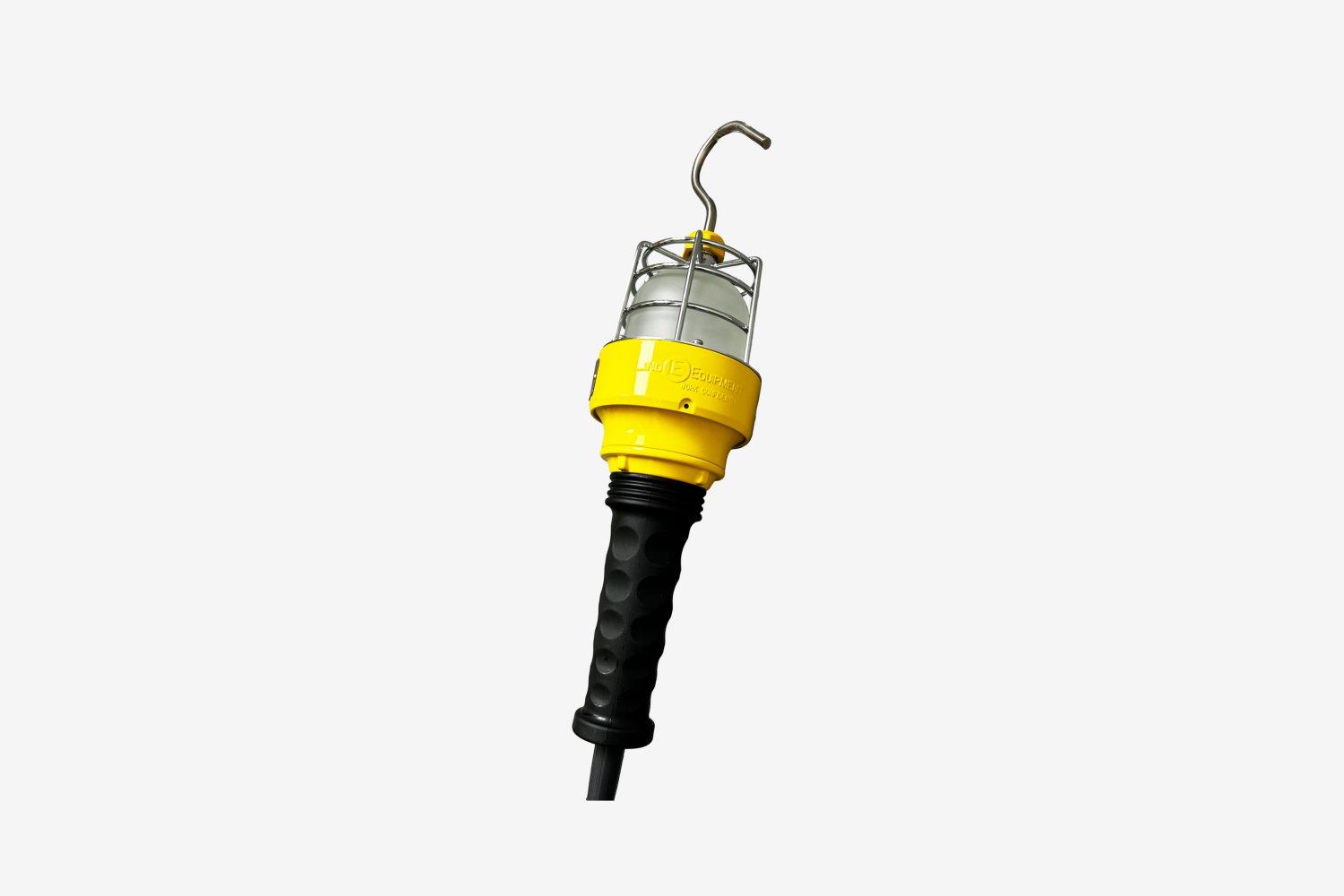
The Explosion-Proof Light, Explained
Many of the questions we get on a regular basis come down to what exactly an “explosion-proof” light is. Customers often confuse the term with other labels they’ve heard before, or nobody has ever explained to them what the light actually does. Let’s try to clear up some of the confusion.
Where explosion-proof lights are used
Explosion-proof lights are designed for use in a “hazardous location”, as defined by the Canadian Electrical Code and by other codes and regulations in other jurisdictions. Broadly speaking, a hazardous location in this context is an area with high enough concentrations of combustible material in the air to cause a fire or explosion. That could be a gas (e.g. natural gas, ethanol, toluene), a dust (e.g. grain, flour, coal) or even a fibre. When these hazards are present, workers are required by law to use specially designed equipment that reduces the risk of igniting the flammable material and causing a catastrophic fire or explosion. For more background on how hazardous locations are classified, see our quick primer on hazardous locations.
One piece of equipment often used in these areas is a portable light. Picture going into a large tank that used to hold fuel, to clean it out and inspect it for damage. The tank will still contain combustible gases long after all the liquid fuel is gone, so you need to protect yourself. But it’s dark inside, and you need to bring a light in with you to see and do the job. Since this is a hazardous location, you need a light that reduces and minimizes the chance of igniting the gases (or dusts, depending on the location). Two types of light for this job are explosion-proof and intrinsically safe.
Explosion-proof vs. intrinsically safe
Electrical equipment certified for hazardous locations uses one of several protection methods. Explosion-proof and intrinsically safe are two of these methods. The aim is similar: to reduce the chance of igniting the flammable material. The approach is different.
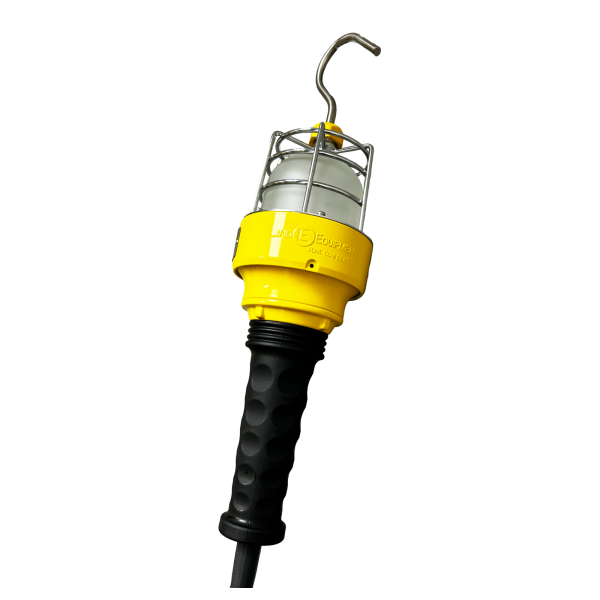
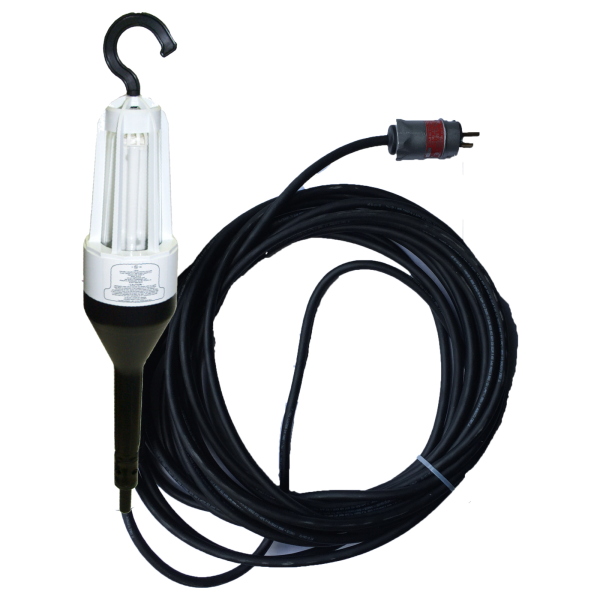
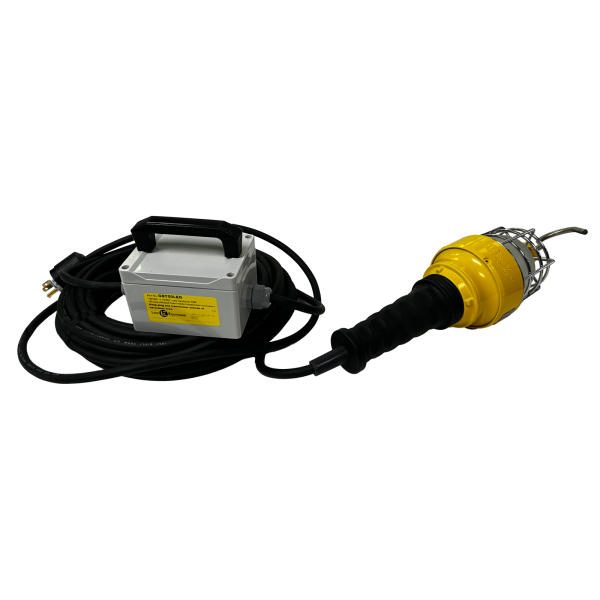
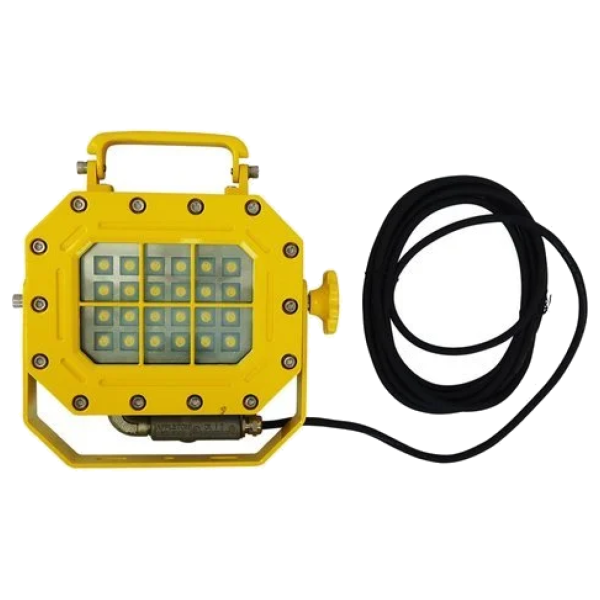
- Explosion-proof lights, like our XP162, are designed to withstand an ignition of the flammable material that happens inside the light itself. To be certified, an explosion-proof light will typically be made of durable, non-sparking material, with a very thick glass globe over the bulb and other features that keep the worker and the surrounding area safe if an ignition happens inside the light. We won’t go into the details here, but achieving this is a real feat of mechanical engineering. As it should be: people’s lives are at risk.
- Intrinsically safe lights are designed not to carry enough current to cause a spark that could ignite the flammable material. To be certified, an intrinsically safe light will typically be battery-powered, with such low voltage in the circuit that a spark arcing through the air could not happen. A good example is a specially designed battery-powered flashlight.
So the terms explosion-proof and intrinsically safe share a similar goal, but they are very different in how they’re applied.
Use only certified equipment
We want to stress this: every product used in a hazardous location must be certified by an approved certification body (in Canada and the US: UL, CSA, ETL, etc.) for the exact type of hazardous area it is used in. You need to know the Class, Division and Group (or Zone, as that system becomes more widespread) that applies to the location, and use a device approved specifically for those criteria. For example, don’t use a light certified for Class I, Division 2 when you really have a Class I, Division 1 area. In the same way, don’t use a Zone 1 classified light in a Zone 0 location. We cover this in more detail in Why Approvals Matter for Hazardous Location Equipment.
Common misconceptions
There are some common misconceptions about explosion-proof lights that are worth clearing up. For example, many people assume an explosion-proof light works by blocking out all gases or vapours, so they can never come in contact with live electrical power, even if the light breaks. That is typically not the case. Explosion-proof lights don’t have to be airtight to do their job, and many of them let gases into the light itself. What matters in their construction is that any explosion caused by those gases can’t escape to harm the worker or ignite more gases in the work area. So before you submerge your explosion-proof light to clean it, check with the manufacturer whether that is acceptable. For example, some of the lights we sell can be power-washed, and others are not water-tight or vapour-tight.
On the flip side, many lights for sale that are not explosion-proof have a “vapour-proof” construction. Don’t assume these lights are also explosion-proof: most are not. An explosion-proof light has to be certified as explosion-proof, and that should be clearly shown in its sales material and certainly on the product itself. Remember: not every vapour-proof light is explosion-proof, and not every explosion-proof light is vapour-proof. Ask, so you know you’re getting the right tool for the job.
Questions?
This is a quick overview of the terms explosion-proof and intrinsically safe as they apply to portable lighting products. If you have any questions, or want something clarified, reach out to us.