
This guide looks at the most common mistakes that people make when they design or maintain a static grounding system.
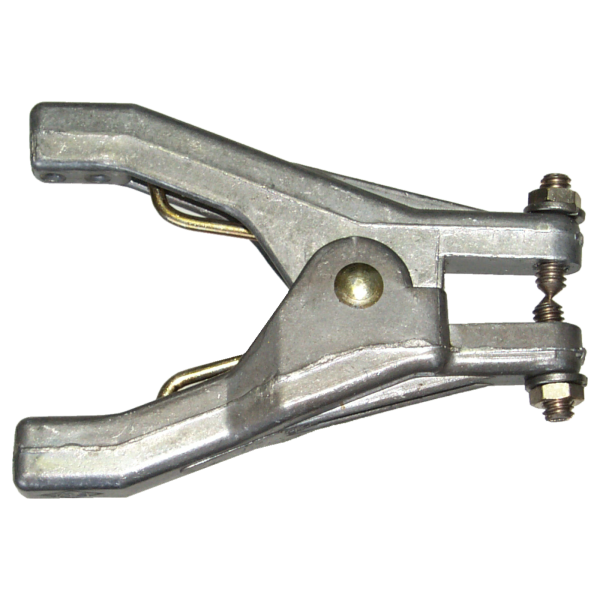
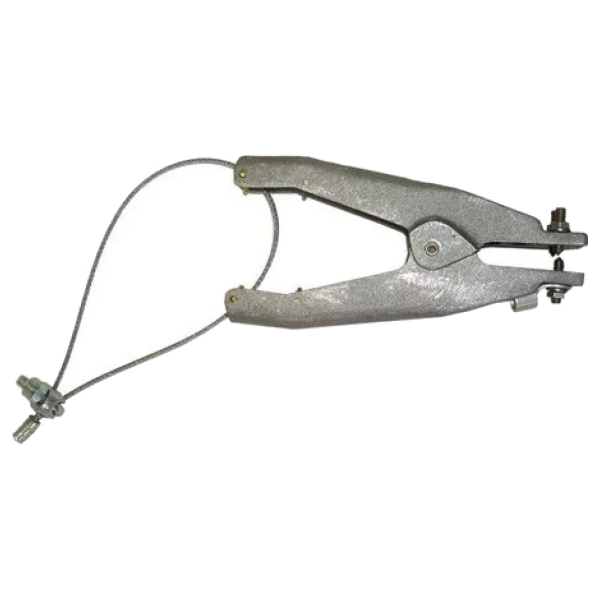
The most common mistake in the design of a static grounding system is to use clamps that are not designed for static discharge.
People who do not have proper static bonding and grounding experience use battery clips extensively. Battery clips have sharp points and weak springs that do not withstand regular use.
Quite quickly, the spring no longer gives a strong grip. The result is poor metal-to-metal contact. The clip also tends to fall off during operation.
Welding clamps are another incorrect choice. Their springs are stronger than the springs of battery clips. But welding clamps have flat ends, and flat ends cannot assure good metal-to-metal contact.
Without strong, sharp points on the end, you cannot be sure that the clamp can penetrate paint, rust or dirt.
Another common mistake is the lack of verification for the static grounding system. Most operators do not know whether their static grounding clamps and wires actually drain static electricity when they are in use.
Typically, a static grounding clamp attaches to a plated steel or copper cable. The cable ends at a known ground point, for example a ground rod or a ground bus. The idea is that the static electricity flows through the clamp and the cable to ground.
But wear and tear, weather, corrosion and other factors can quickly degrade the connection between the clamp and the known ground point.
Many facilities do not have proper maintenance procedures to verify this connection. You typically verify the connection with an ohmmeter. The ohmmeter measures the resistance from the known ground point to the tip of the clamp.
Some facilities have a maintenance program for their static grounding systems. Even there, the verifications often occur only intermittently. This means that a problem with the static grounding system can go undetected for months at a time.
A facility verified an outdoor static grounding assembly. Very thick, insulated copper cable connected the assembly to a known ground point. The facility always assumed that the cable could not fail, because it was mechanically very strong.
Visual inspections found that the system was in place and should operate. But the ohmmeter showed no electrical continuity between the clamp and the known ground point. The static grounding system was completely ineffective.
The facility then removed the insulated jacket and found that the cable was severed. The break was in an area that people could not normally see.
If a static monitoring system had monitored the assembly, workers would have known about the danger immediately.
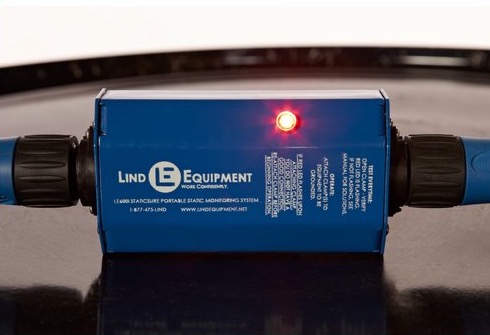
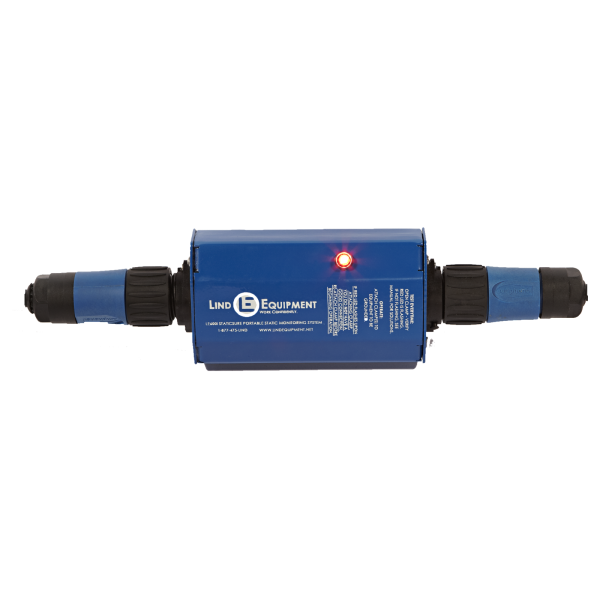
The StaticSure Portable Static Monitoring System is an intrinsically safe portable device. It is designed to help you comply with safety regulations and keep a safe working environment.
StaticSure uses an intrinsically safe set of electronics to monitor the entire connection from the clamp to the ground point. If for any reason the connection is not good enough to drain static electricity, StaticSure warns the operator. It flashes a bright red LED light. The light keeps flashing until you correct the problem and static electricity can drain from the equipment again.
Use StaticSure with proper bonding and grounding clamps and cables. It then helps to make sure that you have a static bond before you handle flammable materials.
The unit is small. You can use it as a portable unit, or mount it to a wall or a vehicle. Its modular design uses standard industrial static grounding clamps. You can quickly disconnect and connect them again, in the configuration that the work needs.
Do you need a configuration that you do not see? Contact us and we will make it for you. To see the clamps and other equipment, browse our static bonding and grounding products.