A static grounding reel must make a good electrical connection at the mounting surface, along the cable and at the clamp. This guide explains how to mount a reel and how to maintain it. Correct mounting and regular checks give the reel a longer life and good grounding performance. To choose a reel first, read our guide Which Grounding Reel Is Right for You?
How to mount a grounding reel
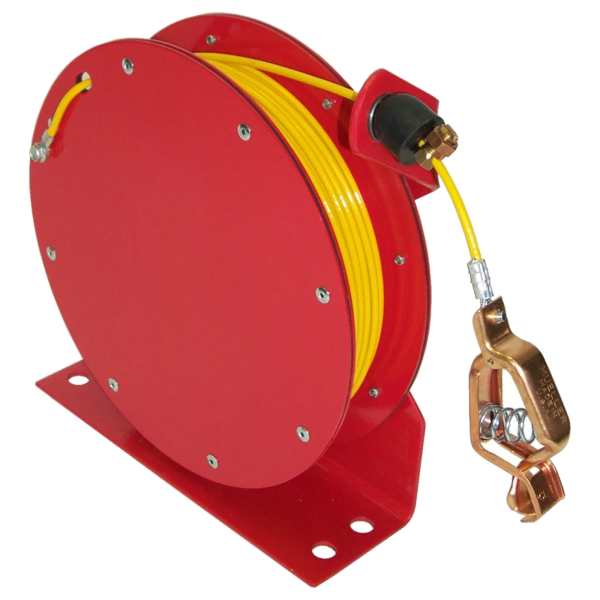
Heavy-Duty Reels
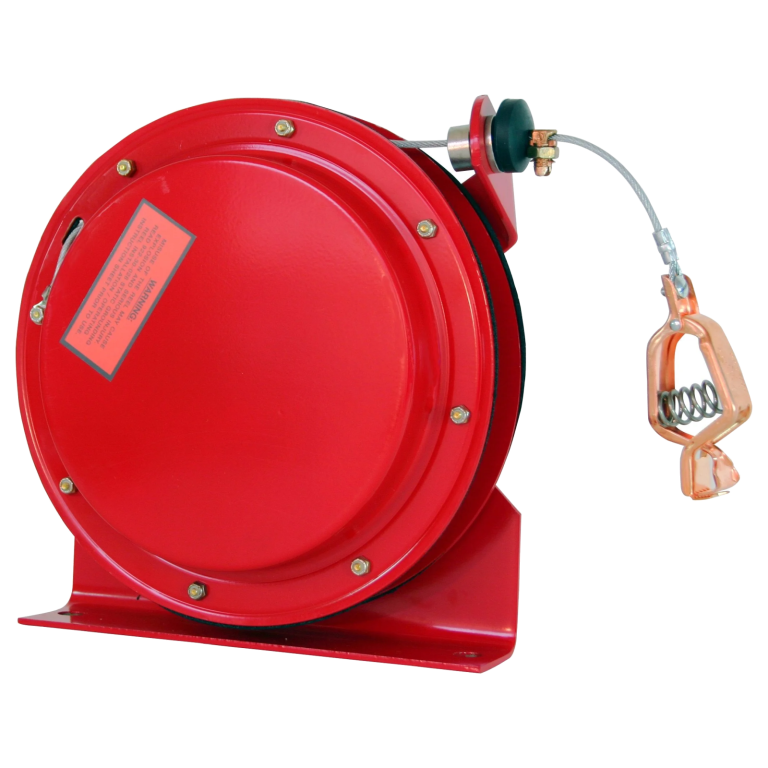
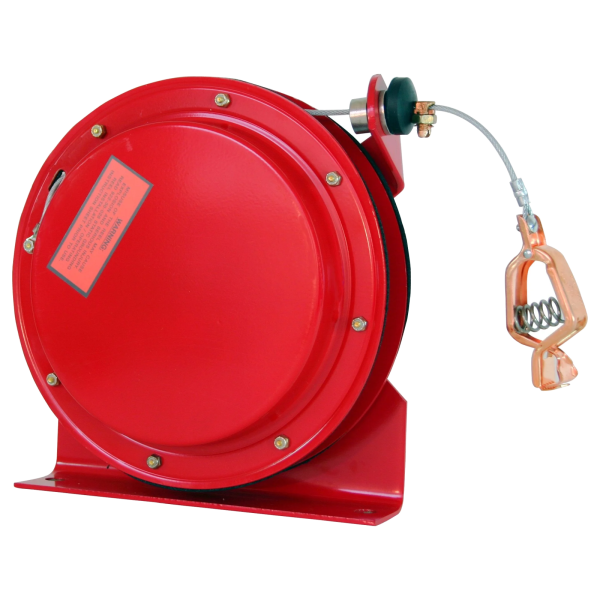
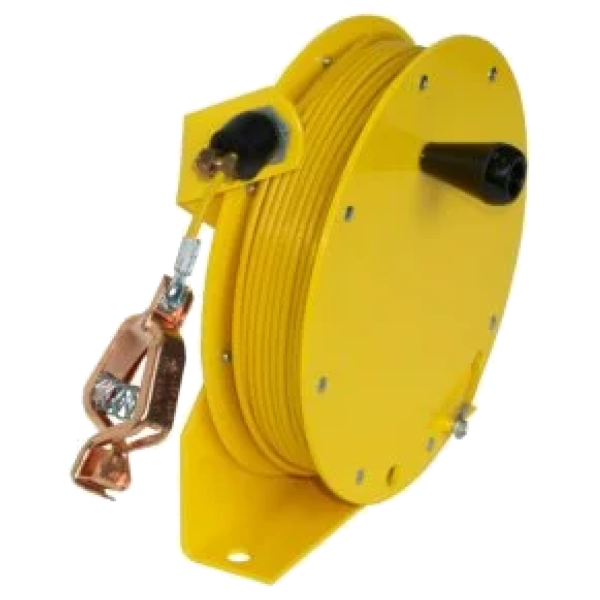
ML2930 Series Self-Braking Auto-Rewind Reel (ML2930-46)
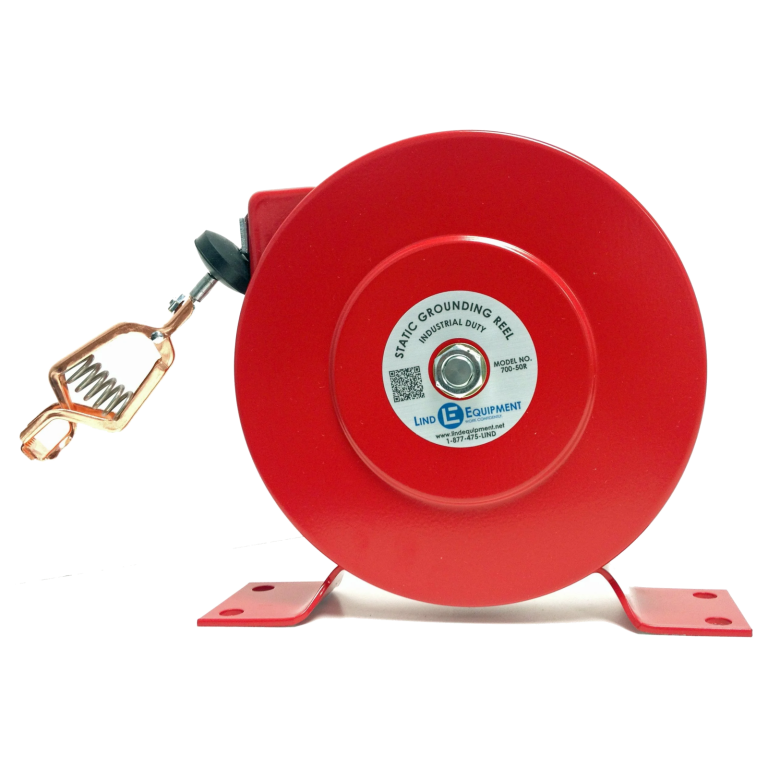
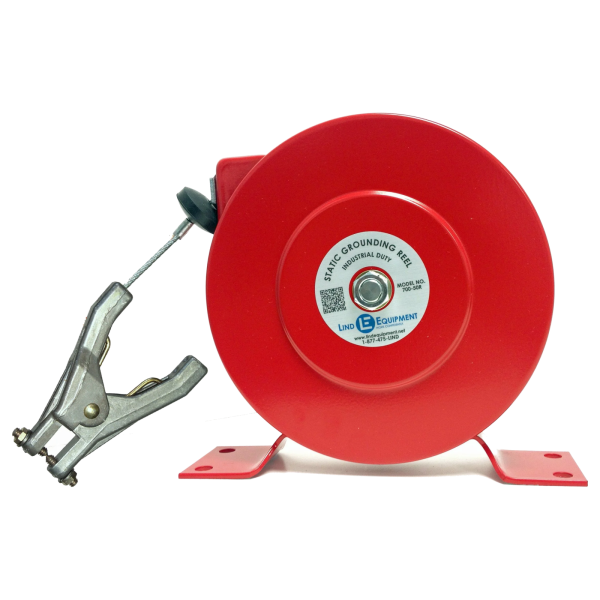
200-20R Series Auto-Rewind Industrial Grounding Reel
Our industrial-duty grounding reels are the 200-20R Series Auto-Rewind Industrial Grounding Reels. They have no guide arm, so the cable can only leave the reel in a straight “line of sight”. For this reason, you can only mount these reels on a horizontal or vertical surface. Their enclosed design is best suited to indoor installation.
Mounting Steps
Do these steps to mount any of our static grounding reels:
If possible, choose a location where the reel has cover from dirt, rain and similar conditions. Cover extends the life of the reel.
Clean the mounting surface. Remove all paint and dirt to make sure that the conductivity is good.
Bolt the reel to the mounting surface. Use the correct number of bolts for the reel.
Test the continuity between the reel and the mounting surface with a resistance meter, for example a multimeter. The resistance between the reel and the surface should be less than 5 ohms.
All our static grounding reels are sealed. You cannot get access to the internal components. The internal components need no maintenance during the life of the reel.
Do these steps to get the longest life from the reel and good grounding performance:
Lubricate the shaft. Every 2 to 3 months, put two or three drops of 30w motor oil on the shaft at the bearing surface.
Walk the cable back to the reel. Always walk the cable back to the reel during retraction. If the cable retracts with no restriction, the main spring may become damaged or broken. This in turn may cause severe damage to the assembly. This step does not apply to self-braking reels and hand-wind reels. On a self-braking reel, a brake assembly limits the retraction speed to two to seven feet per second.
Check the cable connection at the reel. Make sure that the grounding cable is tightly connected to the frame of the reel. If the connection is loose, tighten it. A tight connection makes sure that the static electricity dissipates.
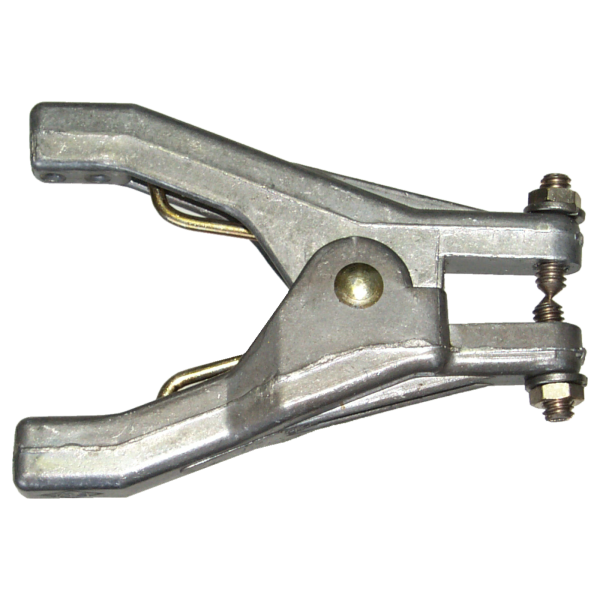
Check the cable connection at the clamp. Check the connection between the grounding cable and the clamp. Make sure that the holding screw is tight. If the connection is loose, tighten it. A tight connection makes sure that the static electricity dissipates.
Check the cable for damage. Regularly check the cable for kinks, extreme bends and cuts. These may affect conductivity. They may also stop the transfer or dissipation of static electricity between the two ends of the cable.
Key points
Heavy-duty ML2930 Series reels have a 4-position rotating guide arm, so they mount on many angled surfaces.
Industrial 200-20R Series reels have no guide arm. Mount them only on a horizontal or vertical surface.
Clean the mounting surface, bolt the reel down, then test it. The resistance should be less than 5 ohms.
Every 2 to 3 months, put two or three drops of 30w motor oil on the shaft at the bearing surface.
Walk the cable back to an auto-rewind reel that has no brake. Keep the connections tight and check the cable for damage.